WWVets.com
J K Lilly
President of Eli Lilly and Company
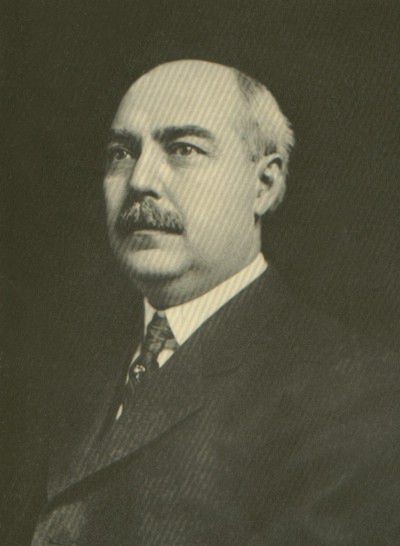
J. K. Lilly founded Base Hospital 32 in February of 1917, in anticipation of the United States entry into World War 1.
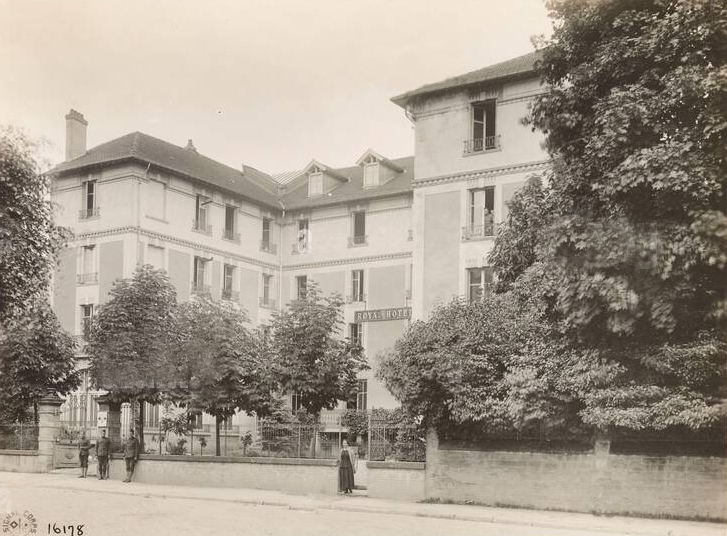
The Royal Hotel in Conrexeville, France was utilized as an isolation ward.
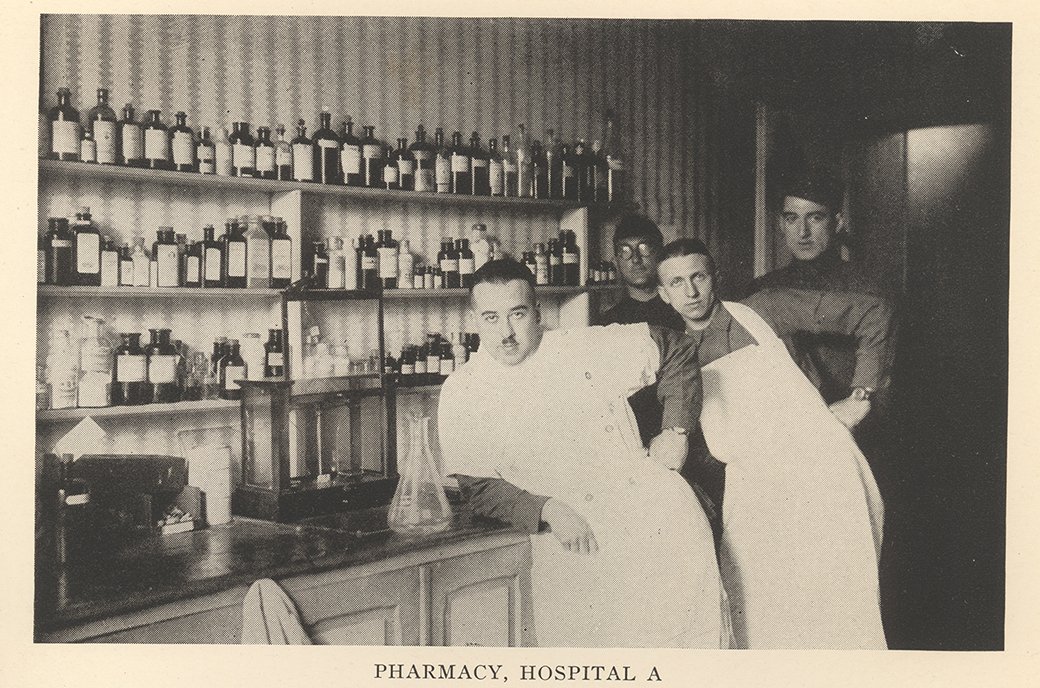
Pharmacy
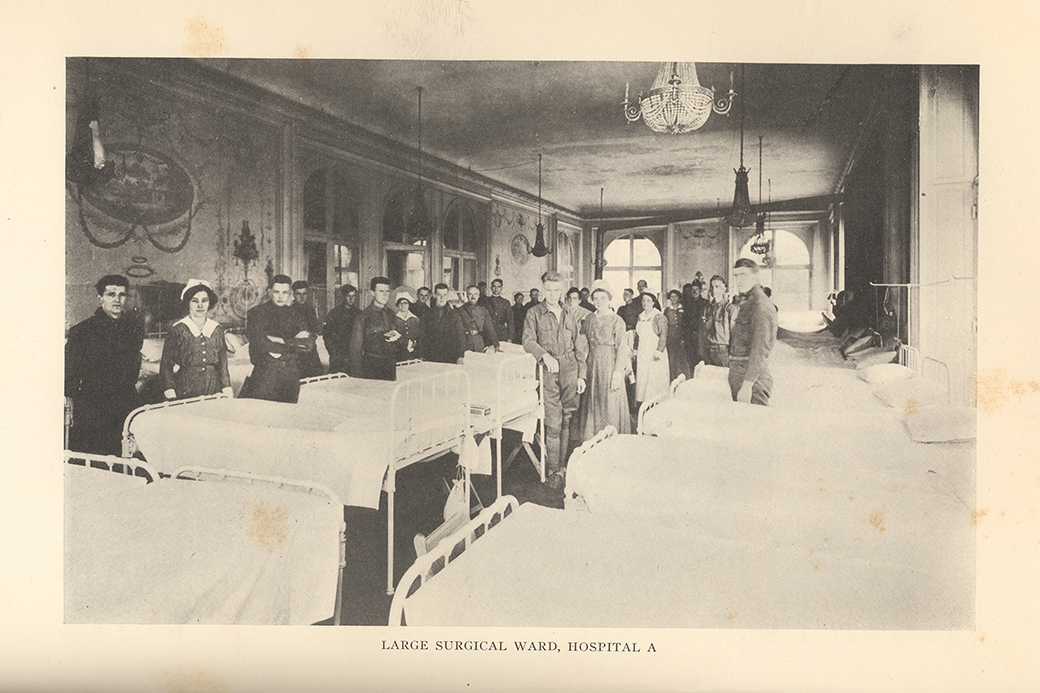
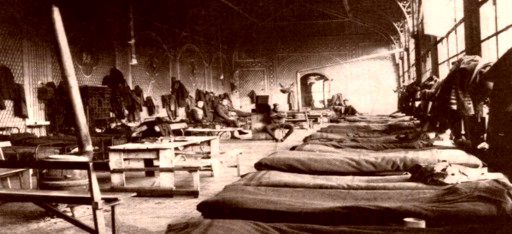
Hospital Ward
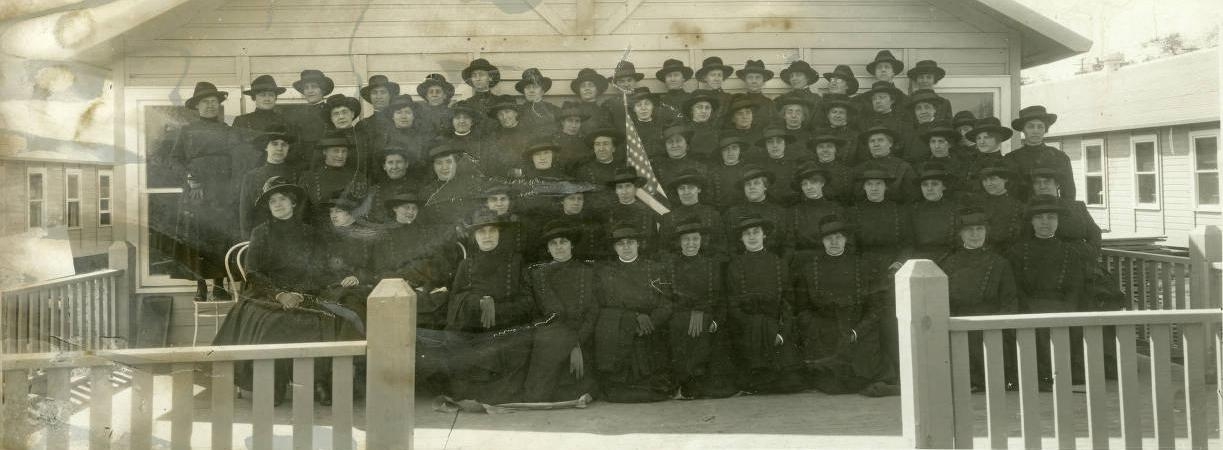
Nurses
Base Hospital 32
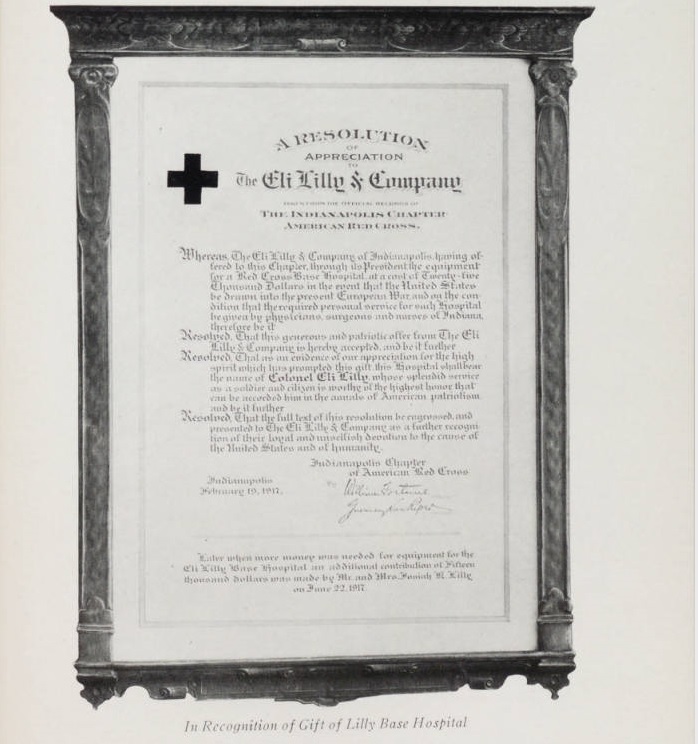
Josiah K. Lilly founded Base Hospital 32 with a $25,000 donation to honor his father, Eli Lilly with the assistance of the Indianapolis American Red Cross.
Additional funding was provided through contributions to the local Red Cross, including $15,000 from Mr. & Mrs. Josiah K. Lilly, all totaling $50,000 to cover the cost of acquiring and moving the necessary equipment. Staffing was primarily garnered from Indiana medical personnel, most coming from Indianapolis including Drs. Edmund D. Clark, Orange G. Pfaff, and Carleton B. McMulloch. By August of 1917, the huge effort was organized with a staff of 180, and the work of packing for overseas shipment began. They began with an encampment at Ft. Harrison, Indianapolis under the command of Major Edmund D. Clark, and were officially inducted into the US Army on September 1, 1917, with control passing to the War Department from the Red Cross. The nurses trained at Columbia War Hospital in New York City and St. Mary's Hospital in Hoboken, New Jersey. On December 4th, 1917 they set sail for France on the USS George Washington.
Contrexeville, France is located in the foothills of the Vosges mountains, 220 miles East of Paris, and had served as a summer resort featuring mineral waters during more peaceful times. The local casino and four other large hotels provided an ideal facility to be adapted for a military hospital. It was approximately fifty miles behind the front lines with an important rail line running through the town. The location necessitated the hospital size to be increased to 1,250 beds. The newly constructed Royal Hotel was converted to an isolation ward for contagious diseases providing room for 200 patients. The resort hotel was utilized as the rooms could easily be converted for hospital usage.
All of the buildings had to be cleaned and sterilized, lighting adapted, with much plumbing and carpentry required. The original equipment for 500 beds, all shipped from Indiana, provided one of the best-equipped hospital units in the A. E. F. They also had the unfortunate distinction of the first casualty of an American Nurse on foreign soil. May Berry died of pneumonia contracted on the voyage to France. The second contingent of personnel from southwestern Iowa joined the personnel from Indiana in the Spring of 1917 forming Hospital Unit R. The hospital, inspired by J. K. Lilly and with the efforts of the Red Cross, provided service to 9,698 soldiers during the war with only 118 deaths. The hospital later served as an evacuation unit, receiving patients from the field hospitals, and preparing them for the convalescent hospitals in 1918. It closed on January 7, 1919. two months after the war ended.
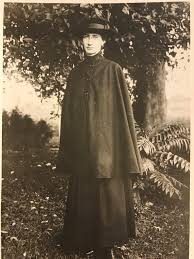
BIOGRAPHICAL SKETCH
Florence J. Martin (November 1876–June 1963) resided in Indianapolis most of her life.
She was chief superintendent of nurses at Indianapolis City Hospital when the United
States entered World War I and transitioned to Chief Nurse for Base Hospital #32 when the unit was formed in 1917.
Base Hospital #32 (Lilly Base Hospital) was an Indianapolis based volunteer unit formed in February 1917 in cooperation with the American Red Cross with the financial support of
Eli and J.K. Lilly to provide medical assistance for the anticipated the United States’ entrance into the First World War. The unit became part of the U. S. Army in September 1917 and arrived in France two months later where they served as an evacuation hospital in Contrexville. The hospital ceased operations in January 1919.
Sources:
Information in collection.
Encyclopedia of Indianapolis, pp. 299-300
Florence J. Martin's papers ate preserved by the Indiana Historical Society and are available online:
https://indianahistory.org > wp-content > uploads > florence-j-martin-papers.pdf
Formation of Base Hospital 32
Source: Hitz, Benjamin D. A history of Base Hospital 32, including Unit R. Indianapolis, 1922, p. 1-9:
The story of Base Hospital 32 begins early in February 1917. At this time, with relations between the United States and Germany becoming daily more strained, a certain group of Indianapolis physicians was already resolving to volunteer its services in event of war. The idea of organizing a hospital from Indianapolis began to take definite form on February 19, 1917, when the following letter from Mr. J. K. Lilly was received by the president of the Indianapolis Chapter of the American Red Cross.
http://mollydaniel.net/contrexeville/introbh32.html#
The Staff of the hospital sailed for France on the USS George Washington on Sunday December 3rd, 1917.
The following is an excerpt from BASE HOSPITAL 32
Lilly Base Hospital
By Conner McBride as published by the Indiana WW1 Centennial
Connor McBride is a graduate student of Public History at Indiana University-Purdue University Indianapolis and intern for the Indiana State Historic Records Advisory Board. He received his B.S. in history from Indiana State University in 2015. He can be reached at cjmcbrid@umail.iu.edu.
Over its year of service, Base Hospital 32 would admit 8,506 Americans, 1,003 Allies, and 189 Germans totaling 9,698 admitted patients. Among the many ailments treated, most common were the treatment of injuries from shrapnel and mustard gas, as well as influenza and diseases caused by the unsanitary conditions that plagued the trenches such as Vincent’s angina, or ‘trench mouth’. Of these patients, 118 would not survive, leaving the hospital with a mortality rate of 1.22%, which Dr. Edmund Clark later reflected was “average”. Despite Dr. Clark’s more modest comments, the hospital’s record received a significant amount of public acclaim with the Indianapolis Chapter of the Red Cross describing it as “a notable record, one that elicited recognition and praise from official sources.” Colonel S. H. Wadhams, in charge of the medical department of the American Expeditionary Forces, also praised Base Hospital 32, calling it, “one of the best in France.” Through the efforts of the doctors, nurses, and personnel of Lilly Base Hospital as well as the Hoosiers at home who labored to provide them with the supplies they needed, Indiana made crucial contributions to the nation’s war effort; striving, as best as they were able, to curtail the cost of war.
TESTIMONIALS:
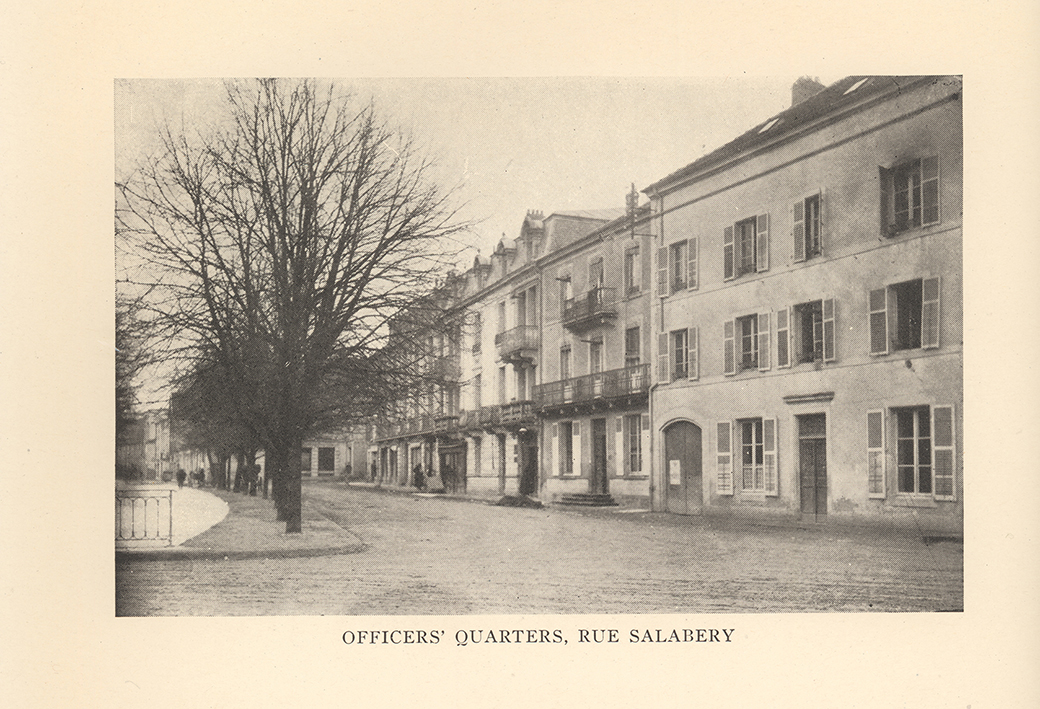
Officers' Quarters
Officers' quarters for Base Hospital 32 officers were located on Rue Salabery (image from unit history of Base Hospital 32)
Elizabeth Melville, Army Nurse Corps,
Henry County, Indiana
"War horrible and unnecessary....
Martha R. Burger
Nurse, Elkhart County, Indiana
A period of high nervous tension, amounting almost to hysteria. Homesick boys trying to hide the fact of homesickness, trying to finish a disagreeable job as soon as possible.
We were located in a village which is a noted Spa, and our chemists tested the water periodically of course. It was always amusing to see and hear the “city fathers” sputter when a “non-potable” sign was put up at one of the (water) sources.
Elizabeth Melville, Army Nurse Corps, Henry County, Indiana
"War horrible and unnecessary....
Henry W. Brockenbrough
2nd Lieutenant, Field Artillery, Tippecanoe County, Indiana (Editors note: also listed in 42nd Rainbow Div.)
Entered service in May, 1917. Stationed at Ft. Harrison, Ind., where he received commission in August, 1917. Sailed for France Sept. 11, 1917, landing Oct. 2, 1917. Attended Field Artillery School at Saumur for three months. Assigned to the 151st Field Artillery, Battery B, 42nd (Rainbow) Division in January, 1918. Went to the front in February, 1918, the 151st F. A., being in active service with the (Rainbow) Division. Saw service on the Lorraine front for 110 days, and later was moved to the Champaign sector and participated in the offensive from July 15,1918, to July 18, of the same year. Took active part in the Chateau-Thierry offensive and the St. Mihiel drive, and last at the Verdun sector.
Was wounded at Verdun Oct. 14,1918 when serving with the Infantry, and was removed to Base Hospital No. 32, where he was a patient for three weeks. Was on his way back to join his battery, Nov. 11, 1918, the day of the signing of the armistice. Also served with the Army of Occupation in Germany. Born at Lafayette, Ind., July 6, 1893, son of Mrs. Nell Wallace Brockenbrough. Graduate of Purdue University. Home is Lafayette. Ind.
Indiana State Library Archives
Helen Augustine Thompson
Army Nurse Corps, Richland County, Illinois
Amusing incidents: "the excitement and embarrassment caused by the announcement of the chief Army nurse on Ellis Island regarding those bobbing hair, etc. Mine was already short (from scarlet fever), and I wore a transformation (wig), but many did not know this. Also the narrow escape of nearly having said transformation pulled off when getting caught in an officer's cufflinks while turning on the dance floor... The scramble to find our clothes and get dressed in the dark in our coaches when we reached Contrexeville in the wee sma' hours." Less amusing: "Deserted by our Chief Nurse and comrades and left without even our travel orders away over in La Baule, France."
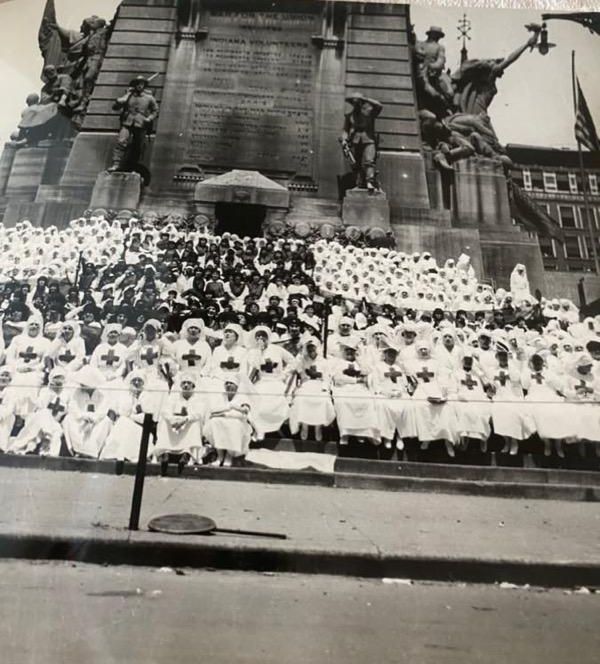
Thousands of people lined the streets in Indianapolis on May 7, 1919
to welcome home Indiana's returning World War 1 soldiers.
Women threw flowers in the path of soldiers marching up Meridian Street to the Circle, where a living Red Cross was formed on the steps of the Soldiers and Sailors Monument.
Paul Shideler/Indianapolis News https://www.indystar.com/story/news/history/retroindy/2018/05/18/
speedway-and-ims-were-crucial-aviation-hub-during-wwi/615446002/
Photo courtisy of Stan & Sarah Seivers
A History of Base Hospital 32
by Benjamin D. Hitz, Compiled in 1922
courtesy of Google Books and available online.
http://books.google.com/books?id=7SYaAAAAYAAJ&printsec=frontcover&dq=Base+Hospital+32&source=bl&ots=-ZZXg4tvmI&sig=TYxqb3yeXlg3NFMgZzBKx-GP4ms&hl=en&ei=xEEpTdGrGMSGnAf4-9mEAg&sa=X&oi=book_result&ct=result&resnum=1&sqi=2&ved=0CBcQ6AEwAA#
Lt Major Dr. Edmond D. Clark
of Indianapolis was appointed as director of the hospital with Miss Florence J. Martin, also of Indianapolis, being appointed chief nurse. On September 01, 1917, the officers and enlisted men of Lilly Base Hospital began training at Fort Benjamin Harrison, northeast of Indianapolis. Six days later at the Indianapolis City Hospital, the unit’s nurses took their oath, and on September 9th left for New York where they were quartered in barracks at the Columbia War Hospital, drilling and adjusting to military life. They remained in New York for three weeks before moving on to Hoboken and later Ellis Island. On the night of December 04, 1917, aboard the SS George Washington, a German ocean liner that had just recently been repurposed as a troop transport, the staff of Base Hospital 32 began their crossing of the Atlantic.
https://www.worldwar1centennial.org/index.php/indiana-in-wwi-stories/2434-base-hospital-32.html